Our colleague Kevin Meaney MVB Cert DHH, Southview Veterinary Hospital and XL Vets member, gives a very good insight into how to interpret and act on milk quality reports.
Mastitis and high somatic cell counts (SCC) can be one of the most expensive health problems on a dairy farm. Teagasc research has shown an increase of 1.3 cents per litre in getting a bulk Milk Cell Count from 200,000-300,000 to below 200,000. In a 94-cow herd, this was shown to increase the farm profit by 33%. Milk recording is an essential tool in monitoring mastitis levels on farm- without it, reliable and effective milk quality control is impossible.
As well as udder heath information, milk recording gives us valuable information on the production performance of cows, which helps us to make decisions on a herd and individual cow level, but here we will concentrate on how to find, interpret and act on milk quality reports.
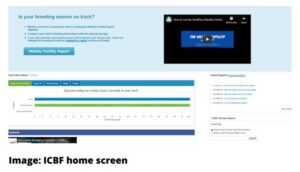
Upon logging into IBCF, you will see on the right side of the dashboard a list of the most recent reports; these are usually the latest milk recording reports.
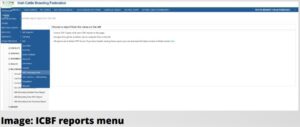
Alternatively, clicking on menu on the left upper corner of the screen, then, selecting reports, then milk management, will allow you access to all your milk reports (See ICBF Reports Menu image below).
Milk Recording Reports
There are 4 Milk Recording Reports;
More commonly used
- The CellCheck Report; this gives herd-level analysis in a very easy to read format Milk Recording Farm SCC Report (Problem Cow Report);
- Milk recording Farm Summary Report; this divides herd information into groups based on Autumn/Spring calving and age – may sometimes provide insight into mastitis problem, if there are other management problems Milk recording detailed.
Less commonly used
- Milk recording Farm Summary Report; this divides herd information into groups based on Autumn/Spring calving and age – may sometimes provide insight into mastitis problem, if there are other management problems.
- Milk recording detailed Farm Report; this provides a lot of general information on each cow on the farm- not commonly used for mastitis control.
Cell Check Report
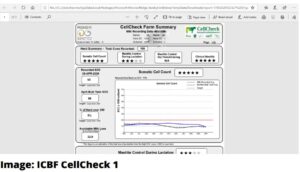
This report is a very powerful tool that very quickly and clearly shows us how the herd mastitis control is performing and highlights any worrying trends. It evaluates 4 measures of performance; (and gives the farm a quick, eye-catching star rating for each) 1
- Somatic Cell Count
- Mastitis control during lactation
- Mastitis control during dry period/calving
- Clinical mastitis
Somatic Cell Count
This section starts with the bulk milk versus the average SCC at the recording, showing the effect of cows withheld from the tank on the overall SCC of the herd. It also gives the percentage of infected cows in the herd; the higher this is, the greater the source of infection for other cows and the greater the risk of spread. Finally, there is an estimate of loss of milk production, to illustrate the cost of the problem and the benefit in resolving it.
Mastitis Control During Lactation
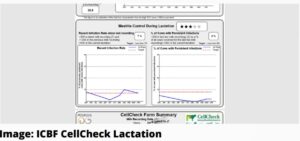
The recent infection rate identifies the percentage of uninfected cows at the last recording that are now infected. An increase here points to possible problems with the milking regime and control measures. The Chronic infection rate identifies the percentage of cows with persistently high SCC. These animals are a source of infection to other cows and are less likely to resolve or respond to treatment. Many of these cows will need to be culled, so an increase above the 8% threshold presents a serious and expensive problem.
Mastitis Control in Dry Period/ At Calving
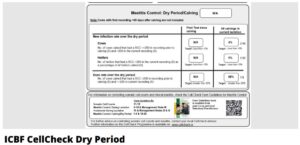
The New Infection Rate over the Dry Period gives the percentage of cows that dried off without a high SCC but had one in the new lactation. This may point to poor hygiene at or around the time of drying off, or during housing, calving down or early lactation. It also raises questions about the efficacy of the dry cow therapy and use of sealers.
The Cure Rate over the dry period, is the real test of the Dry Cow Therapy and culling policy. Low cure rate suggests ineffective dry cow tubes but could also mean that some cows should have been culled last autumn, instead of drying off.
Clinical Mastitis
This section is usually blank, because very few farmers take the time to log onto ICBF and record use of mastitis tubes or clinical mastitis. This is a pity, because accurate recording of this information can be really useful on an individual and herd level- it is very informative to see how many times a cow has been treated for mastitis, along with her SCC results for the year. This can be done on the ICBF event recording option on the menu on the top left corner of the dashboard, or by text message to ICBF. To register your mobile number telephone 1850-600-900.
Milk Recording Farm SCC Report (Problem Cow Report)
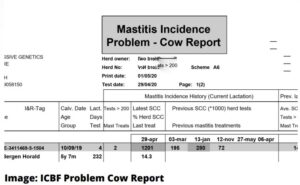
This report lists the mastitis information for all the cows that had a high SCC in this lactation, order of their SCC at the last recording.
For each cow it gives up to 7 important pieces of information;
- Age- a big factor in response to therapy
- Lactation- again older cows less likely to respond
- Number of tests over 200,000 in this lactation- is this a recent or chronic infection?
- SCC results for the last 3-4 recordings; very high results indicate poorer response to therapy
- (and 6.) Average SCC and number of high SCC results in the last lactation- cows that were infected in the last lactation and again in this are very unlikely to respond to Dry Cow Therapy this time around
- Number of mastitis treatments in this lactation and the last very useful information to have.
Actions – What to do with all this information
- Identify new cases (recent infections)
- Identify infected quarters, using California Mastitis Test (CMT) and sample for culture.
Options include;
- Treat infected quarter with mastitis tubes – only likely to work in quite new cases
- Dry Off the quarter – do not treat with dry cow therapy, watch closely for mastitis
- Dry off cow – a longer dry period increases cure rates and reduces risk to rest of herd
- Cull the cow (See 4. below)
- Review management
- Identify the bacteria causing the infection this will help to pick the most effective control measures
- Identify the source (High SCC cows) and is from uninfected cows. Options include;
- Milking last
- Running a separate high SCC group
- Culling infected cows
Identify risk factors for spread – there are too many of these to discuss here, and the risks on your farm need to be identified and resolved, your vet will be happy to advise you on this
4. Culling decisions – Unfortunately, a large proportion of problem cows will ultimately need to be culled because of a SCC problem. Which cows to cull depend on a number of factors;
- Herd Factors – these will determine how many animals you can afford to replace;
- The level of infection in the herd
- Number of in-calf replacement heifers
- Number of cows culled for other reasons, such as infertility or lameness
2. Individual Factors – these will determine which cows will be at the top of the culling list and which will be further down;
- Number of high SCC results in this lactation- more high results means a poorer response to Dry Cow Therapy
- Number of high SCC results- high SCC last year, and again this year point to a poor chance of response to Dry Cow Therapy- these cows go to the top of the culling list
- Age – generally cow in their 3rd lactation or higher show a poor response to Dry Cow Therapy
- Changes to the udder- this is a factor that is often overlooked, but if a cow has a lumpy udder, she is much less likely to respond to Dry Cow Therapy


 Alexa Du Plessis