
Category: Uncategorized

 Alexa Du Plessis
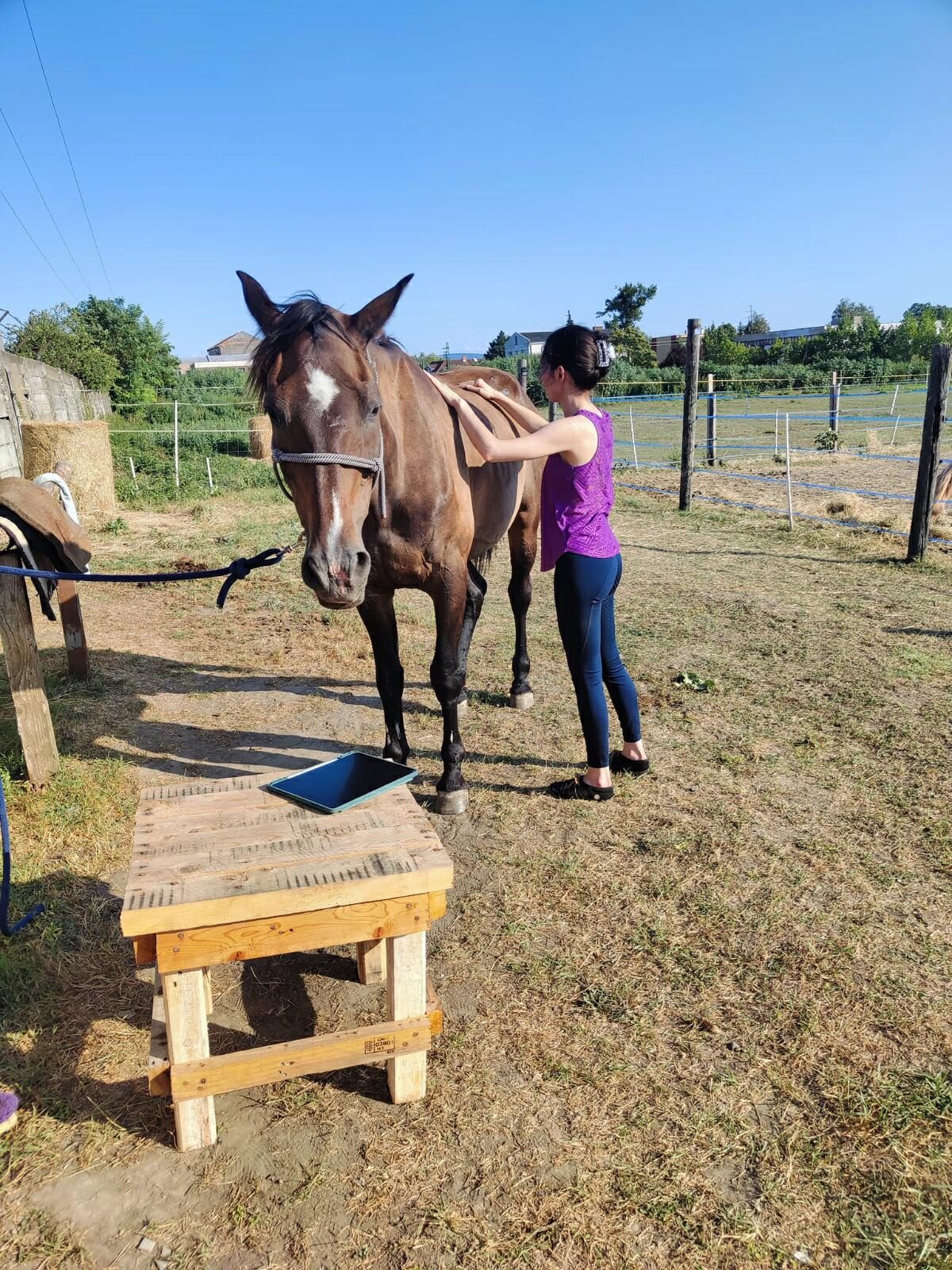
Acupuncture in Dogs and Horses
Exciting news! Glasslyn is now offering acupuncture for both pets and horses!
Muskerry based Vet Barbara Kajtarova will now be offering this service to our Macroom, Bandon and Kinsale clients.
WHAT IS ACUPUNCTURE?
A science that sees disease as an impalance or disharmony in the body. To rebalance we need specific points called acupoints.
DO ANIMALS TOLERATE ACUPUNCTURE?
Of Course! They tend to relax and enjoy the process. For patients who become stressed, we can use traditional ways of calming with anxiety relief medication the we can give you before the visit.
WHAT CAN WE TREAT WITH ACUPUNCTURE?
We can treat a wide variety of diseases in combination with traditional western veterinary medicine. We can achieve great results in alleviating pain in our patients.
WHAT TYPES OF PAIN CAN WE TREAT?
- Chronic Osteoarthritis pain
- Neurological pain
- Oncologic pain
- Visceral pain
- Myofascial pain
- Internal diseases
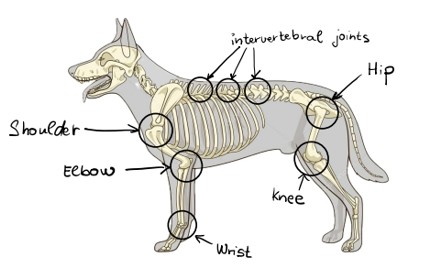
If you think your dog is in pain and you want to know more call or email us as [email protected] and ask for MVDr. Barbara Kajtarova.
We are looking forward to improving your pet’s quality of life!

Visiting Gaelscoil Chionn tSáile in Kinsale!
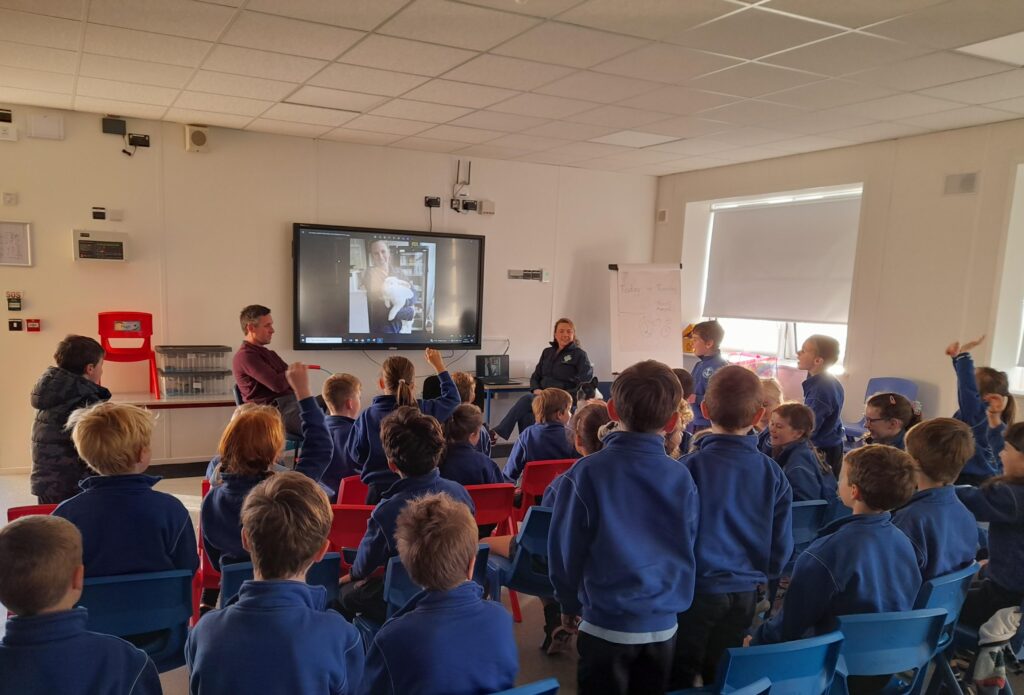
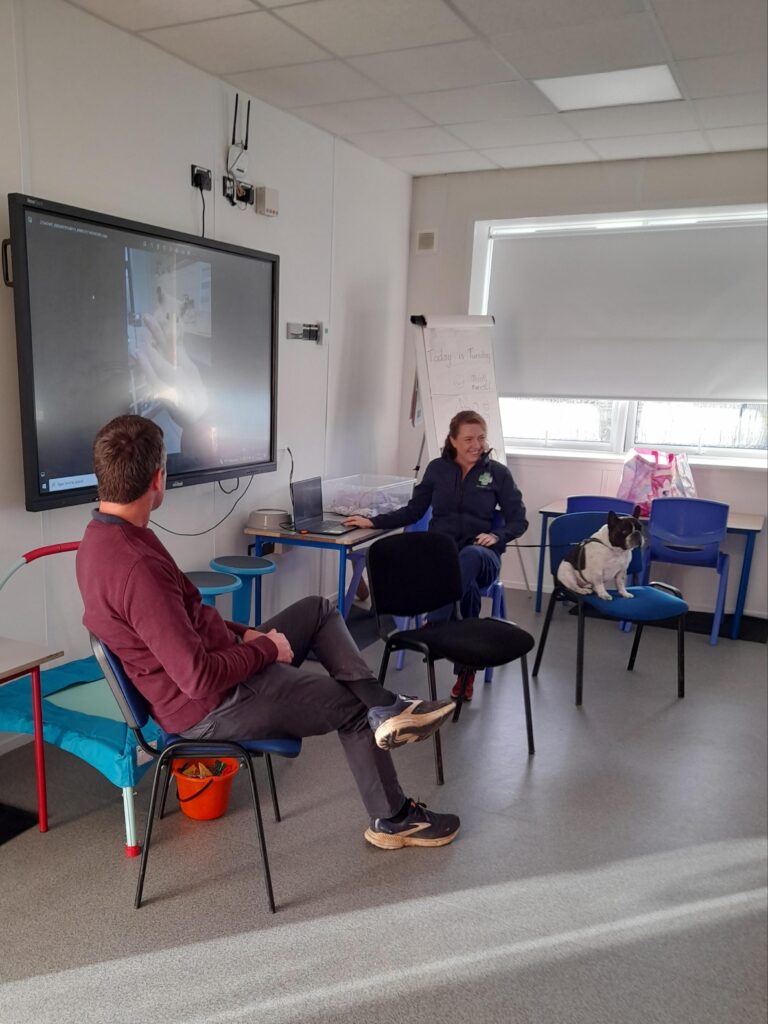
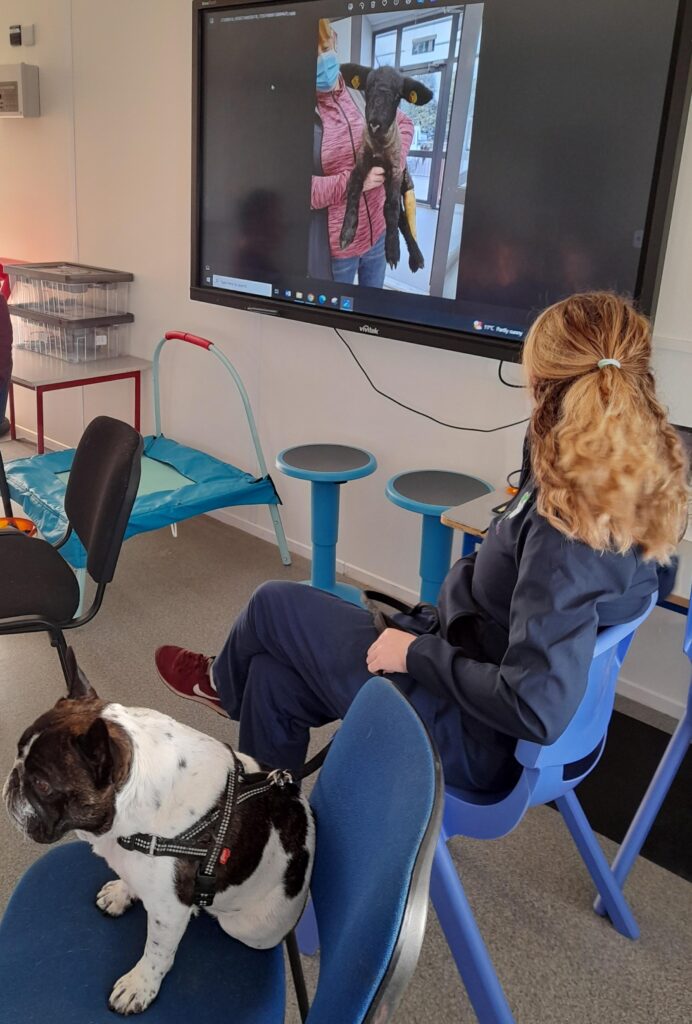
Another amazing school visit in October 2024 and this time we headed to the wonderful kids at Gaelscoil Chionn tSáile.
Vet John, Vet Nurse Viv and French Bulldog Baloo chatted about Irish wildlife, Halloween pet safety, what Vets and Vetnurses do and played some ‘Guess the Breed’ and ‘What’s this Xray about’
We love chatting to the local kids and not only inspire them to take animal welfare to heart, but also answer all their questions.
And maybe convince a few to become Vets and Vet Nurses too!

Say Ahh! What’s the deal with Pet Dental Cleanings?
Did you know that dental disease is one of the most undertreated conditions in veterinary medicine?
Dogs and cats can both suffer from various underlying conditions leading to periodontal disease, but tooth brushing is one of the most effective tools to prevent plaque and tartar build up, but what if you cant? A lot of pet owners do not have the time – or a compliant pet – and some pets are just more prone to plaque build up than others.
That is why Veterinarians offer annual Dental check ups and Dental Cleanings that normally go like this:
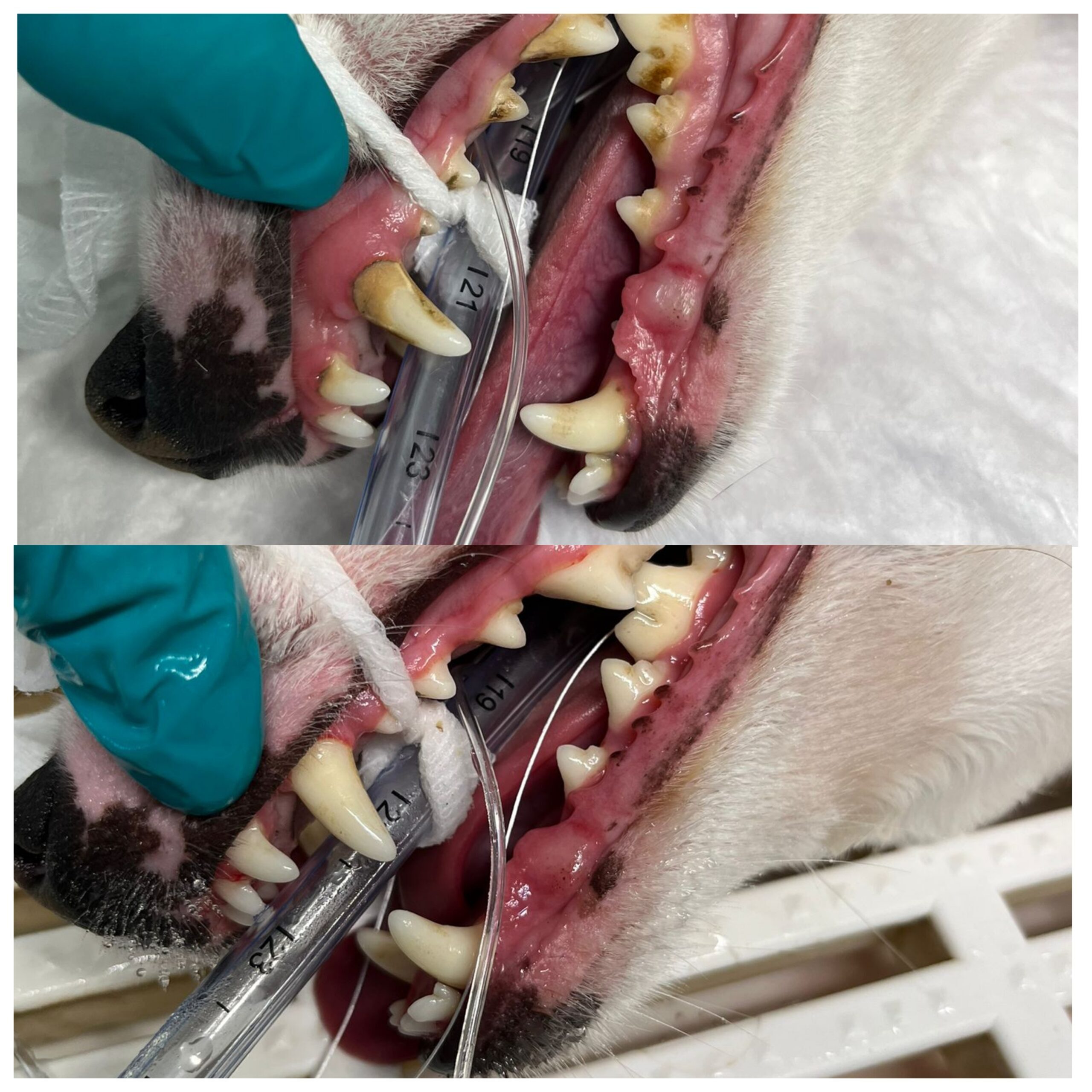
Firstly, a Vet will have a look in the consult room to see it there is tartar buildup or any injured teeth or potential problems.
From there a complete mouth exam must be performed under general anaesthesia.
For a professional cleaning, intubation is also needed as we use an ultrasonic water descaler. (If the animal was not intubated, a pet could inhale water, which can lead to aspiration pneumonia)
The anaesthesia and water descaler also allows us to clean under the gum line, which is were the bacteria sit that destroy the bone that holds the tooth.
Ultrasonic descalers that do not use water get incredibly hot and can burn your pet when not used properly. They also do not clean under the gum line, making a “dry clean” not effective because the tartar on the actual tooth is not the problem, it is whatever bacterial plaque accumulates under the gum line.
General anaesthetic allows your Veterinarian to also probe the teeth after cleaning to assess the depth of pockets, gum recessions or to see if there is significant bone loss.
More and more clinics now also have dental radiography, which makes it even easier for the Veterinarian to decide if a tooth should come out or not because the amount of bone loss – and sometimes fractures can be seen better. It is also a good tool to look for missing or extra teeth and cysts!
The last step of a good dental assessment and treatment is polishing: it is the final step to destroy the bacterial biofilm.
Most dogs, especially small breed dogs, certain cats and greyhound, will need at least one dental in their life time. Some need it from as young as 3 years of age – some only when they are a bit more mature. Some dogs also need yearly assessments and cleanings in order to prevent tooth extractions.
Glasslyn offers a health plan with a dental add on, where routine boosters, flea and worm prevention and a yearly clean are included.
Come in and talk to us for options and pricing or sign up via https://go.trustvet.com/signup/glasslyn-vets.
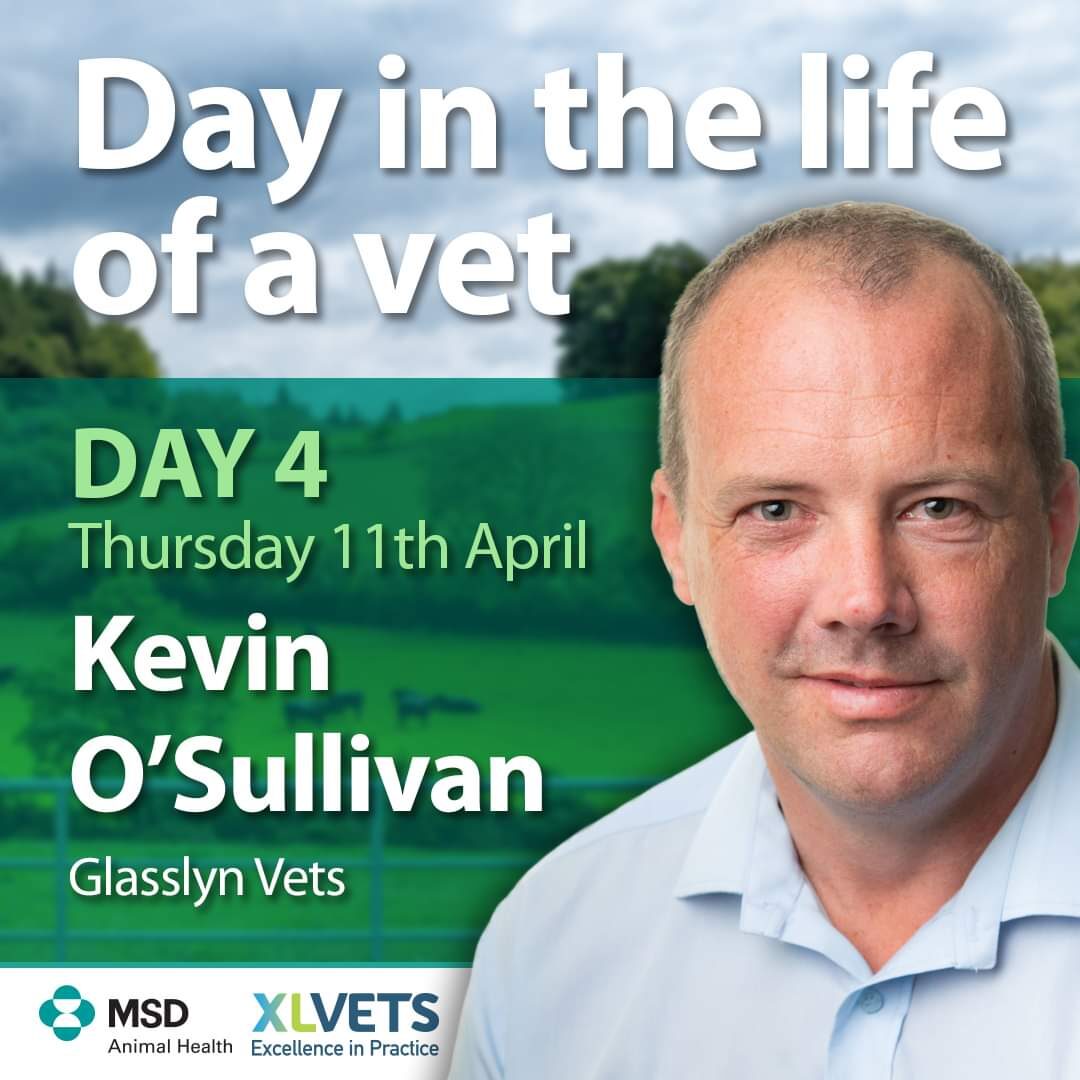
Day in the Life of a Vet
Recently MSD Animal Health and XL Vets ran a series called Day in the Life of a Vet and our very own Kevin O Sullivan was shadowed for a day.
Meet Vets Christine and Richard, Vet Nurse Katie and FLuff & Buff Groomer Caitriona, as well as some interesting cases and a chicken!
Watch how the day unfolded on Instagram: https://www.instagram.com/stories/highlights/17845474305184603/
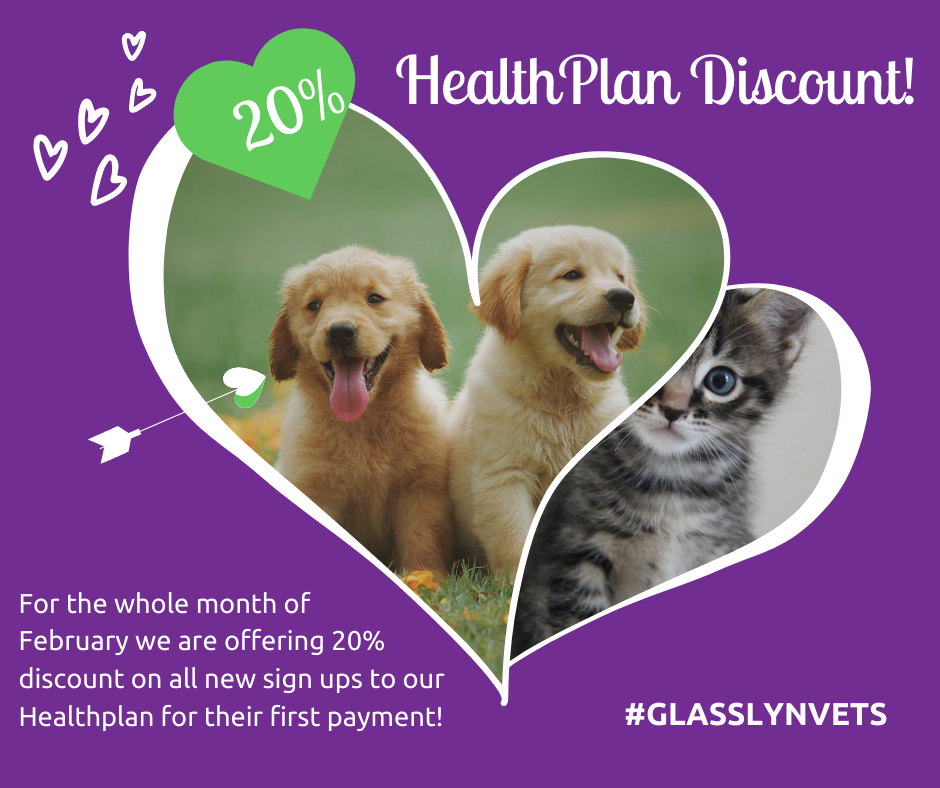
20% Discount for all new sign ups to our Health Plan!
It’s the month of love and so we have decided to offer 20% discount on your first month membership fee with our Healthplan!
No cut off age, no pre exsisting condition exclusions, we accept them all 🙂
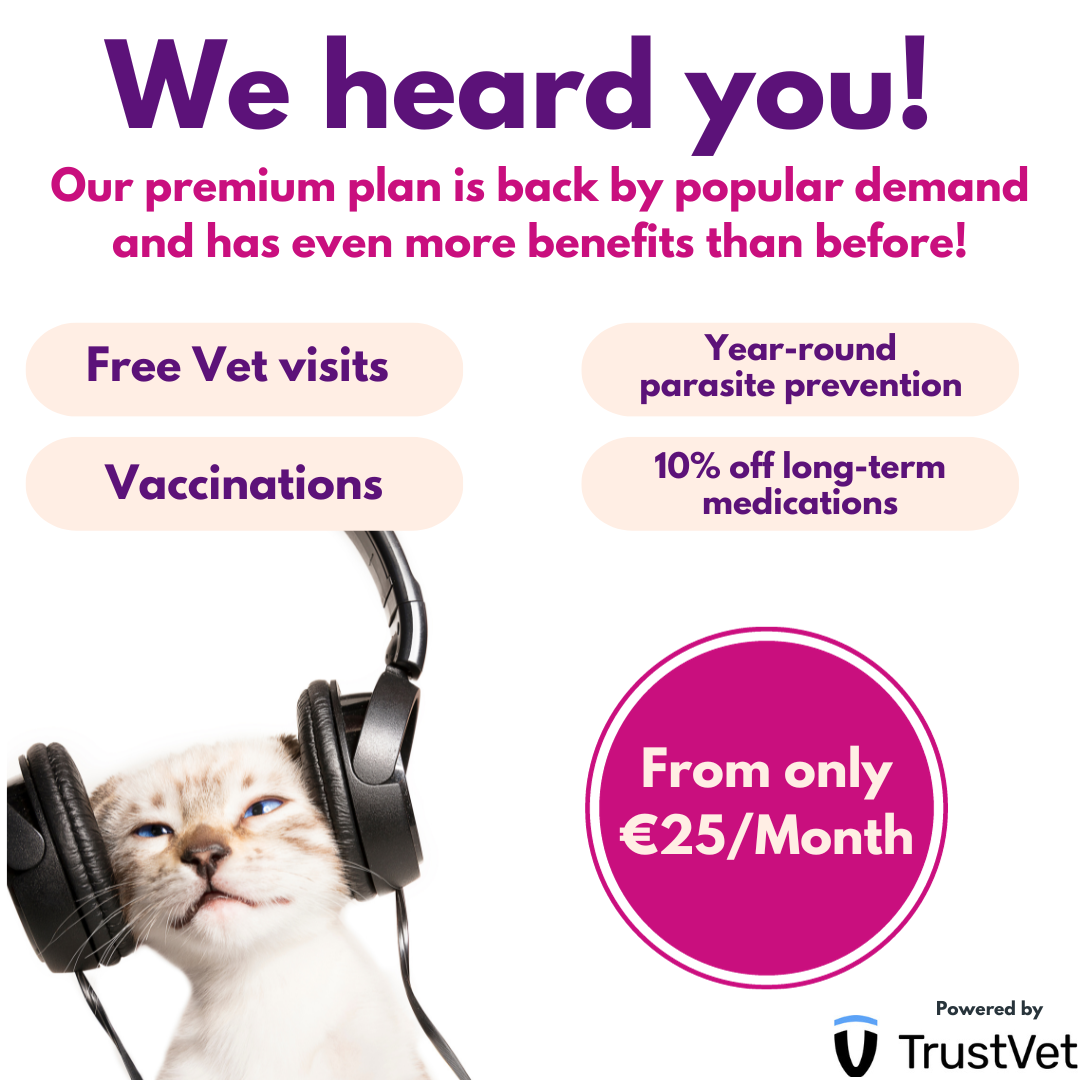
Why join Glasslyn Vets’ Pet Health Plan?
Did you know Glasslyn Vets offer a Pet Health plan that helps you spread out the costs of your veterinary bills?
A Health plan gives you peace of mind that you are actively monitoring your pets’ health with regular visits, updated vaccinations and year round parasite treatment!
At Glasslyn we don’t judge or discriminate, so the health plan is open to all ages and preexisting conditions so you can sign up your new puppy and senior cat so that they both can benefit from our plan.
We do have a few exclusions, this plan does not cover:
- Once off medications
- Visits out of hours, home visits or public holidays
- Vaccination restarts after missing the booster
- Maximum of 12 visits a year
Lets look at the benefits of the Healthplan!
- Year round parasite protection
The harm from parasites to a pet’s health can range from minor irritation to serious conditions that, if untreated, can be fatal.
At Glasslyn we stock a wide variety of Flea and Worm medications, giving you the option of a spot on or tablet, monthly or every 3 months.
- Annual Vet check
Having your pet in for an annual vet check ensures that we catch any health problems early, avoiding an escalating illness and saving you added vet bills!
On the Essential plan you get a yearly vet check, and on the Premium plan you get up to 12 visits a year!
- Yearly Vaccinations
Unvaccinated pets are always at a greater risk of coming in contact with deadly diseases and spreading them to other pets or even humans.
Our Health plan covers your pets first and second vaccination, as well as the yearly booster. We also cover Kennel Cough for dogs and Feline Leukemia for cats.
- 10% Discount on Glasslyn Pet food
We stock Royal Canin, James Well Beloved and Calibra which offers a veterinary approved pet food for all budgets.
These brand have Vet specific diets like Gastrointestinal for pets prone to upset stomachs, Urinary for pets prone to bladder stones, Sensitive for pets with allergies and much more!
They also have the Health range for every day health and wellbeing.
- 10% Discount on Neutering
Did you know neutering your pets let them live longer?!
Neutering your pets prevents females from coming into season, attracting unwanted male attention which can lead to pregnancy or false pregnancies. It also prevents the risk of testicular cancer in males and uterus infections and cancers in females. It helps reduce urine marking and roaming in male dogs and cats.
This procedure is very straightforward with your pet coming in in the morning and going home that afternoon.
- 10% Discount on Long term medications
We know the vet bills can add up when your pet is diagnosed with a long term illness or condition, that is why our Premium plan covers any long term medications that your Vet has approved, this includes arthritis medications, allergies, heart or liver and others.
- Optional Dental pack
If your pet is prone to dental disease or bad breath, this added option would be for you!
At a small added monthly fee, we will include a yearly dental scale and polish, to keep your pets teeth healthy! By having a dental cleaning once a year, we can avoid tooth decay early enough to save you from expensive extraction surgery.
- Optional Blood and Urine analysis
This option is also at a small added fee and gives you added peace of mind. This is a good option for our older pets, to catch any underlying issues early enough.
Talk to our team or sign up on our home page for savings up to 490 euros a year!
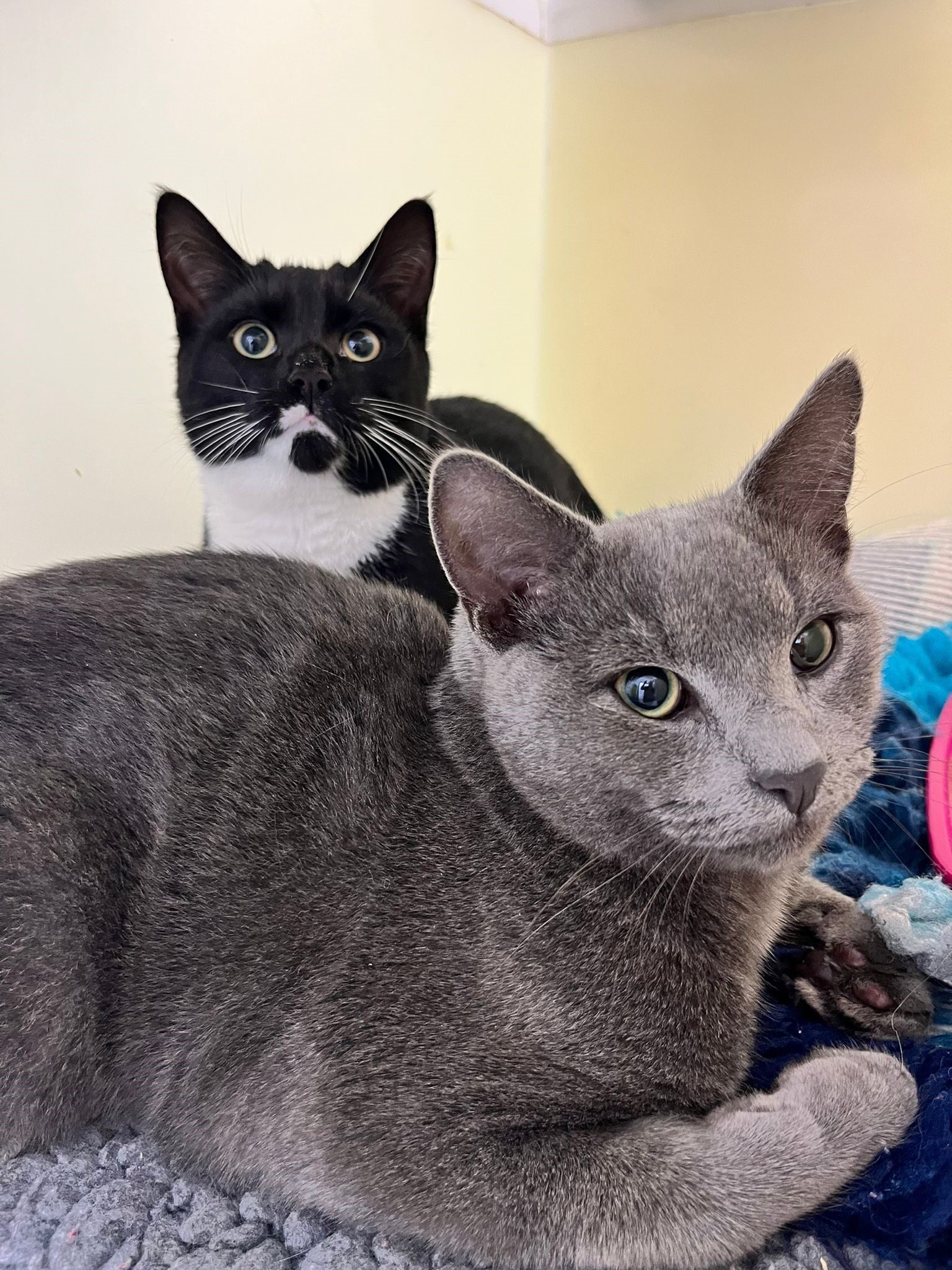
Cat Weight Loss Tips
Tips for weight loss in cats
Obesity in cats are common, especially those who are kept indoors. Obesity is a serious problem that can predispose cats to different complex pathologies. These pathologies can put the cat’s life in risk, like hepatic lipidosis, diabetes, cystitis, skin problems or lameness.
A cat with perfect body condition-and weight- should have marked waist, the ribs should be palpated easily (but not seen) and shouldn’t have a lot of abdominal fat.
The pillars for a successful weight loss in cats are:
- Diet: if the cat is overweight or obese, switch his/her diet to a specific one for weight loss and maintenance.
- Exercise: it is very important to keep the cat moving! Try different things to promote exercise. Some of them are:
- Play with the cat: it will help on the weight loss journey, but it is also important to simulate hunting behaviours in cats that are kept indoors. Every cat will prefer a different toy, some prefer rat-like toys, others prefer playing with balls. Try to play with your cat at least 30-60 minutes a day.
- Change the place of the water or food bowl every few days (carefully so the cat doesn’t get stressed).
- Hide some food in different places of the house, so the cat must look for it (a small part of the cat’s food ration).
- Make your cat jump on surfaces (putting the food on high surfaces, playing…).
- Treat any kind of mobility issues.
- Ambiental enrichment: it is possible that the cat is eating more than he/she should because he is getting bored. Ambiental enrichment is an important part of the weight loss program (and also important in every cat we have home!). Some things that we can provide our cats with, are:
- Scratching posts. Both vertical and horizontal.
- High places where they can climb.
- Hiding places.
- Interactive toys
- Litter trays must be away from the food and water, in a quiet location. In multi-cat houses, it is important to have 1 more litter tray than the number of cats we have.
- If we have more than 1 cat, it is important to provide them with enough resources, so they don’t have to fight for them (food bowls, water, resting places…).
- Follow-up consults: it is important to control the evolution of the weight loss program to make sure that it is working.
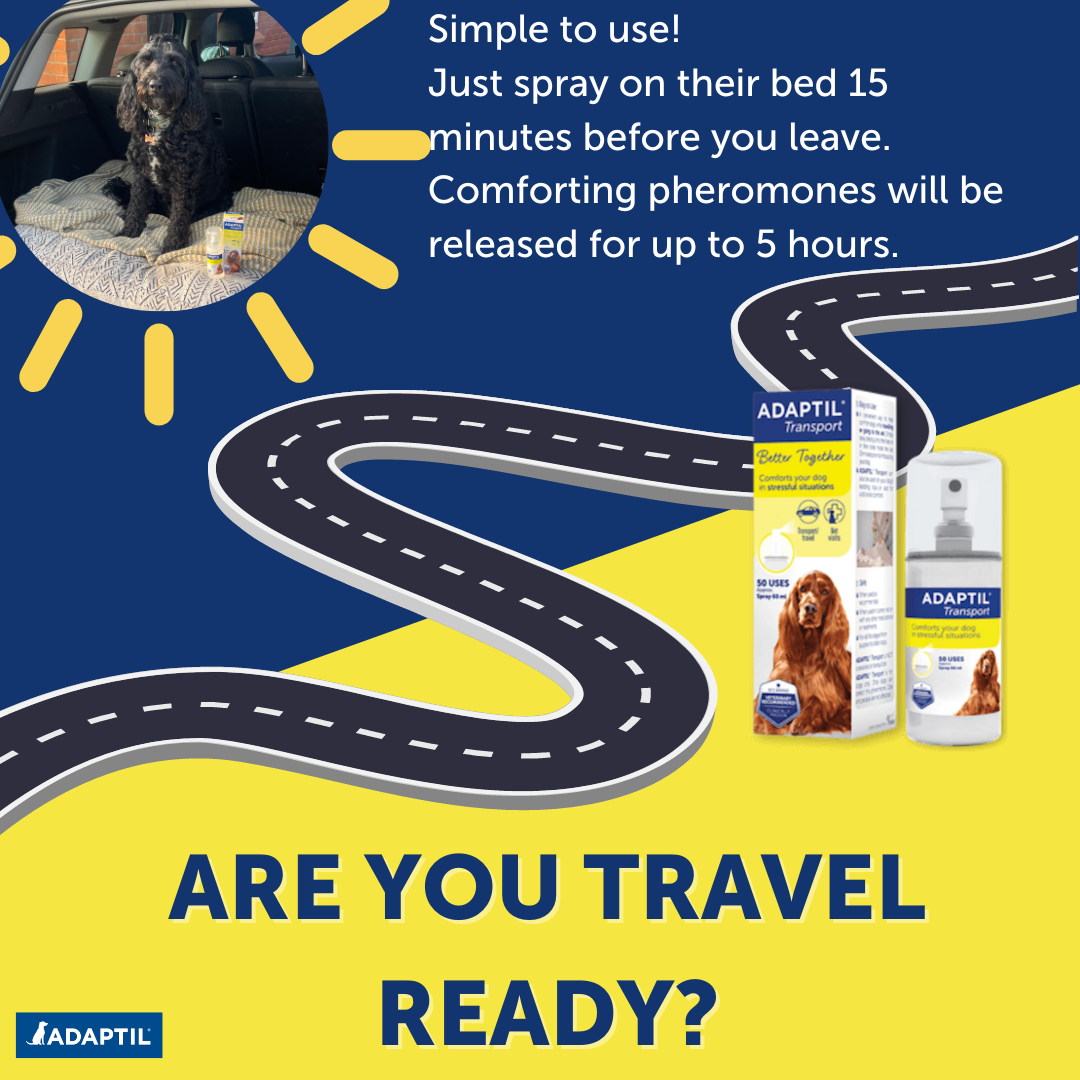
Adaptil: How to make car travel more relaxing for your dog
1. ADAPTIL Transport is clinically proven to help your dog cope when travelling:
Studies have shown:
· 85% reduction of shaking.
· 71% reduction of panting*.
Easy to use:
· Spray in the car or on your dog’s blanket/bedding just 15 minutes before your dog gets in. They will then receive up to 5 hours of comforting pheromones.
2. You need to build up your dog
You need to start small. Start with a stationary car and reward them for relaxed body language. When you feel they are comfortable, progress to having the engine one and when happy with this stage progress to taking short drives.
3. Safety tips
· Make sure your dog is properly restrained for their (and your) safety.
· Options include a seatbelt harness, dog carrier, crate or dog guard.
· Introduce your dog to the appropriate restraint so they have positive associations with it beforehand.
4. Travel tips
· Stop for exercise and toilet breaks every 2 hours.
· Bring water for your dog with you.
· Keep the car well ventilated.
· Don’t leave your dog unattended in the car.
5. Sign that your dog is uncomfortable or anxious
Dogs have super sensitive hearing and can hear noises earlier and much more acutely than humans. If they have not yet acclimated to the sound of car horns, or cars passing by on rainy days, these sudden noises could make them nervous and, therefore, show signs of being uncomfortable or anxious when you take them outside.
If your dog seems restless when they are around cars and they start panting, trembling, salivating or even vomiting, you need to take action to allay their fears.
Helping them to get used to cars may take some time, but with patience, gentle training and support, you’ll soon be travelling around.
6. Other tips for travelling with your dog
As well as using ADAPTIL Transport to support your pooch, these tips should help you travel safely and calmly!
· Train them to use and be comfortable in a carrier, or wearing a car harness before you start using them in the car.
· Before the journey, help your dog get used to being around the car. Let them sniff and explore the car when it is stationary; show them their ‘space’ in the car, whether it’s a crate, or where they will be restrained with a harness; put some familiar items like their blanket or favourite toy beside them; sit in the car together with the engine running, but don’t drive; after a few times doing this, start taking short trips. Always reward your dog when they are calm with quiet praise during the process.
· Make sure you give yourself enough time before the journey to go at your dog’s pace they may not be ready for a car journey straight away, but need a couple of times just sitting in the car without the engine on to adjust.
· Associate their first journeys with pleasant things, like going to the park.
· Keep the first journeys short. When on longer journeys, stop at least every couple of hours for exercise and to allow them to go to the toilet.
· Only feed them with a light meal before you travel. This will help limit car sickness if they are prone to it.
· Take plenty of water with you on the journey and make sure they have a drink when you stop for a break.
· Keep the car well ventilated and never leave your dog unattended in the car.
· You can also try playing music in the car that helps calm your dog after all, it’s proven that certain types of music can help put your dog at ease.
· Training your dog from a young age to accept that travelling by car is a normal part of life, will enable them to join you in all sorts of adventures and activities and build their confidence.
Happy travels!
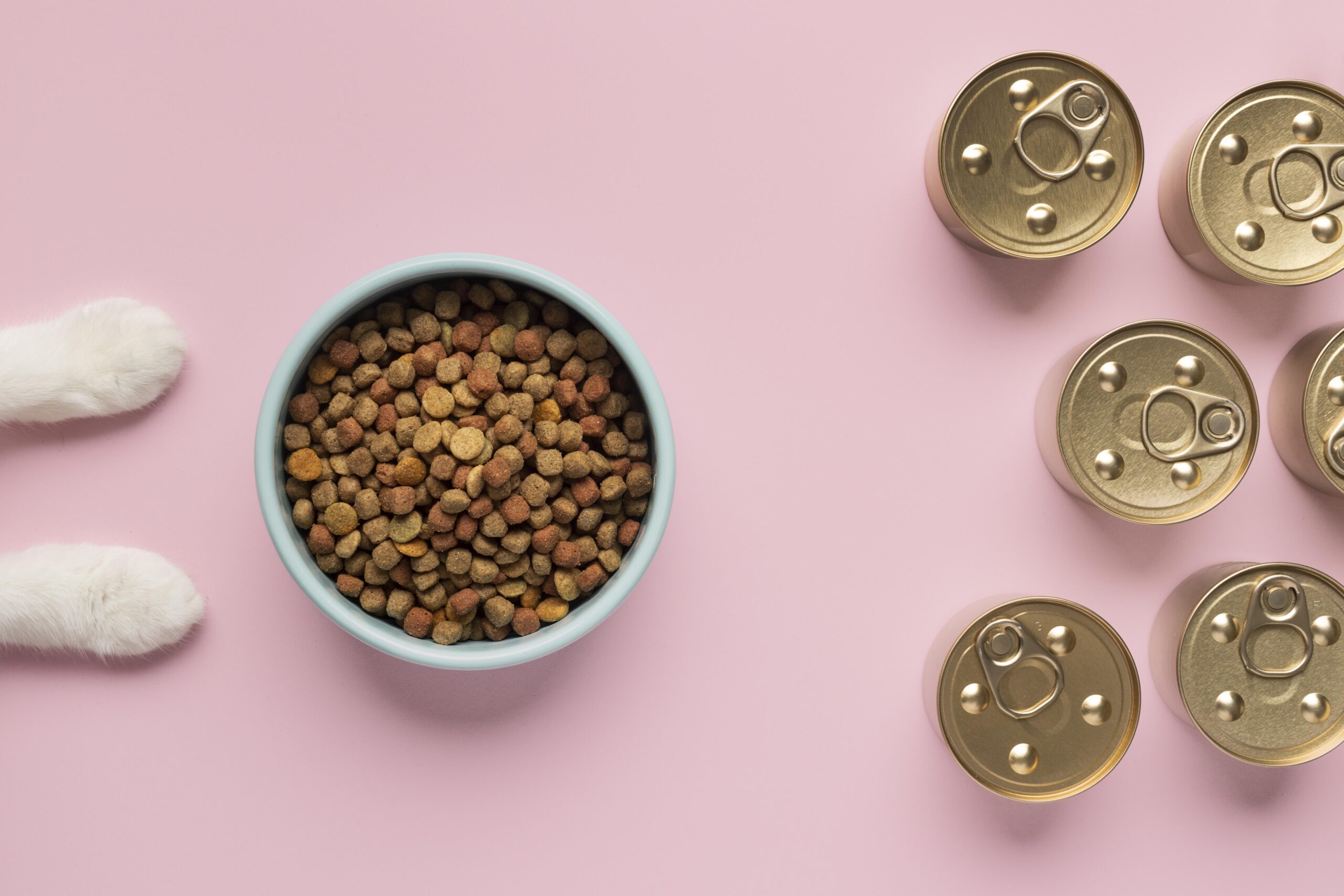
Prescription Diets – What are they and how do they work?
These are special diets formulated to help manage and treat specific health conditions and to support our pet’s health. Examples of some diets are;
Hepatic and Renal diets: These are different foods created, to help support the function of these organs in those affected with kidney disease or liver disease. The levels of protein, energy and salts are adjusted and are easier for the liver and kidneys to metabolise.
Gastrointestinal diets: These are produced specifically for those pets with sensitive stomachs which require management long-term or for those with a temporary GI upset.
Urinary diets: Some individuals can suffer with urinary issues such as cystitis or urinary stones, which need long-term diet management to avoid reoccurrences. These are formulated with lower levels of certain salts and have supplements to promote the health of the urinary system.
Allergy diets: Hypoallergenic and Anallergenic diets are examples of these, which are prescribed if underlying allergies affecting the skin, gastrointestinal system or both are suspected. They are utilised to try and reduce the incidence of allergy flare ups and can be part a multimodal approach in terms of management.
Talk to a member of staff if you feel that your pet might benefit from one of these today!
- 1
- 2