No products in the cart.

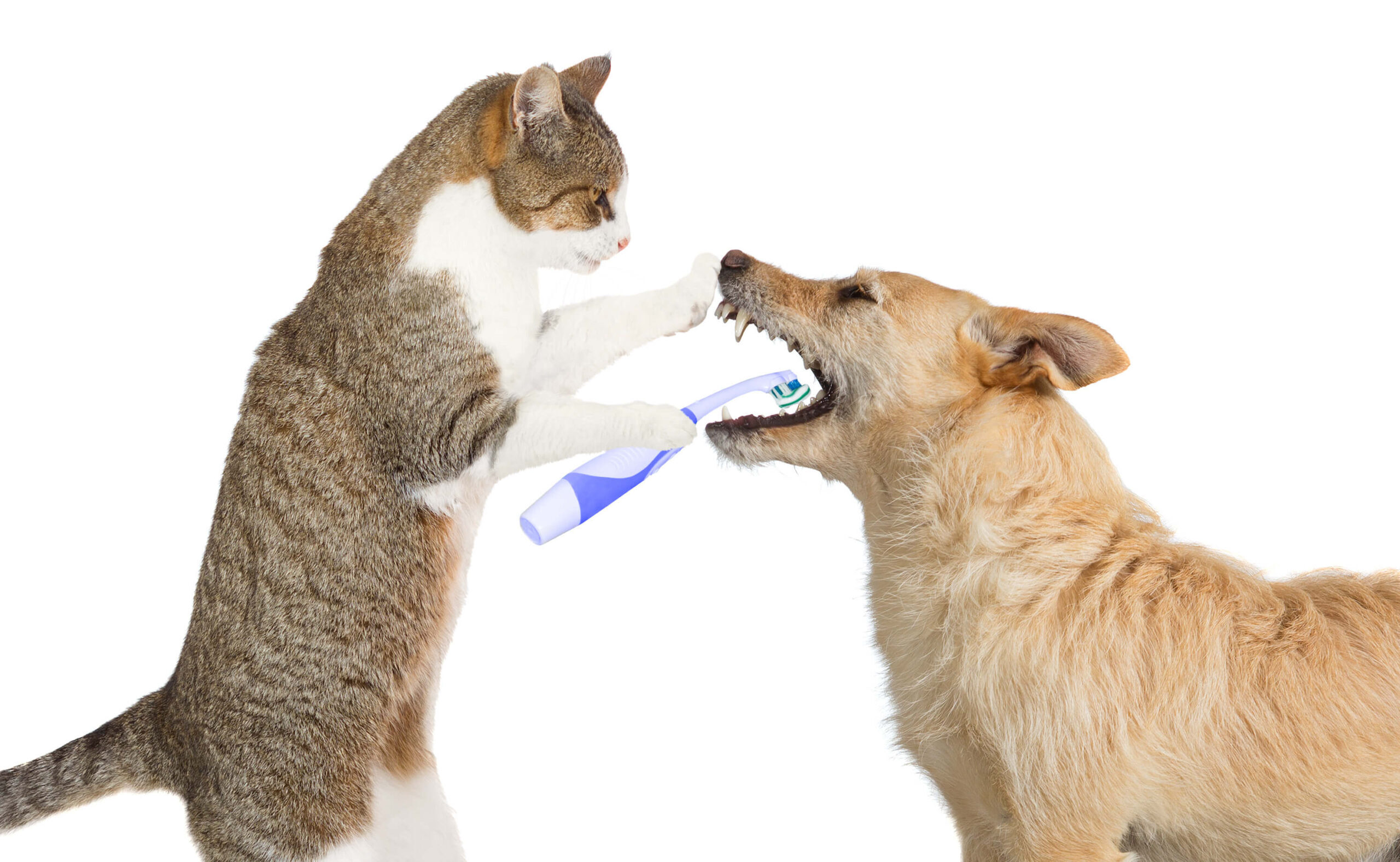
Cute cat cleaning dogs teeth low res

Importance of Pet Dental Health

Looking after the dental health of your pet is very important.  By the young age of three most dogs and cats have some degree of dental disease. Unfortunately, this is not noticed by many pet owners until later in their lives as pets tend to hide signs of discomfort a little bit better than we do. It is usually not until owners notice that their furry friend has smelly breath which is a common sign of dental disease.

What are the other signs of dental disease?

Some signs of dental disease can be more subtle than others, but they are still important to identify.

  • Plaque and Tartar build-up

Plaque is a film on the teeth that is composed of bacteria; when this accumulates, it can harden into tartar.

  • Red, swollen or bleeding gums
  • Difficulty eating or chewing
  • Loss of appetite
  • Weight loss
  • Pain

If your pet is reluctant to let you touch their mouth, outside or inside, they may be experiencing pain. Pain occurs when tartar and food are trapped below the gum line.

Importance of regular examinations

We recommend regular examinations by a veterinary surgeon or nurse to determine if your pet needs teeth cleaning or something more invasive like a dental extraction. A routine dental cleaning involves scaling and polishing of the teeth but if an extraction is needed the vet will discuss this procedure with owners prior to doing so. We also offer dental x-ray which is important to determine the health of the roots of the teeth and surrounding bone.

Although this may prove to be difficult, we would highly recommend regular teeth brushing for your pet. We offer a variety of toothbrushes, toothpaste and water additives specifically designed for pets (not human toothpaste!). Pets who have 100% wet food diets are particularly vulnerable, so we recommended appropriate dry food and dental chews which helps to crack off some plaque buildup.

Thanks to Laura Creedon, Veterinary Nurse, for her insights into this area.
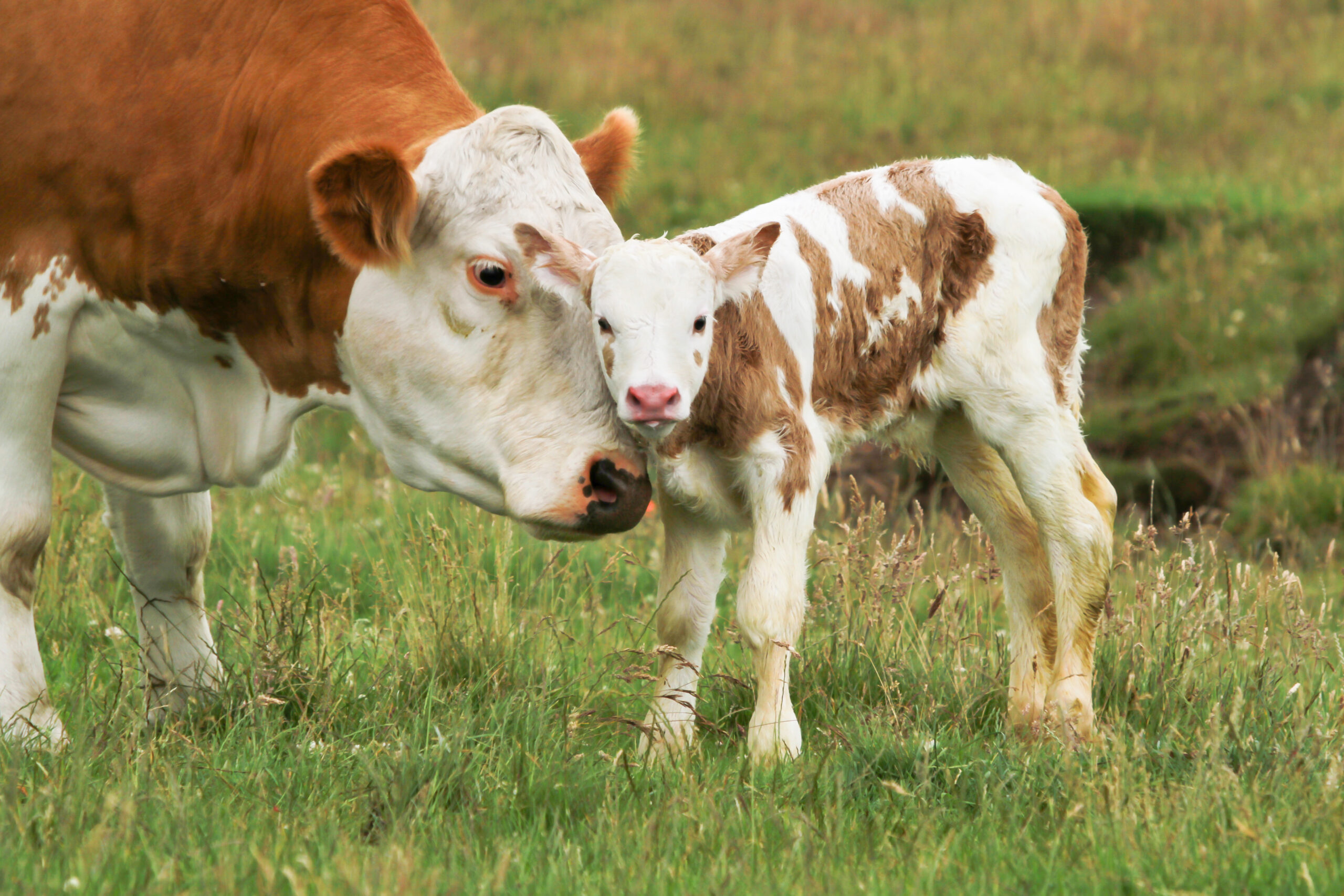
new born calf

Getting ready for Breeding

If you are going to start AI on May 1 then April is the month for preparation.

In simple terms Pregnancy rate is Submission rate x Conception rate.

In Irish terms submission rate is the amount of cows that are available for service (calved >42 days) that have been bulled in the first 3weeks of breeding. The target is 90% in a seasonal herd.  The target for conception to 1st and 2nd service is about 65%. So if you have 100 cows and you have a submission rate of 90% then 90 cows should be bulled in first 3 weeks. If 65% of them hold then this leaves about 41 cows left to breed (that were eligible to breed in first 3 weeks.)

Second service will get another 27 cows (65%). This gives you in total 86cows in calf in 6 weeks.

So in short you can make up for a poorer conception rate with a good submission rate. While conception rate is affected by disease/health and energy (energy levels, dry matter intake; buffer feeding) submission rate is really just seeing them in heat.

Submission rate can be improved by:

  • One month before breeding you need to check cows for heat or not – pre breeding. Tail paint/apply scratch cards to all cows 3 weeks before start of breeding and note any cows not bulling.
  • Any cow calved 42 days and was not seen bulling within these 3 weeks should be scanned and treated if necessary. This avoids the loss of time further in breeding season and a cow that was once a February calver becoming an April calver.
  • Any cow that was treated for retained cleaning should be re-examined before breeding. They may show heat even with a chronic womb infection.
  • A vasectomised bull will aid in heat detection during the breeding season.

Conception Rate

  • Ensure all vaccinations are up to date and that maiden heifers have received their primary course ahead of breeding. Lepto/ BVD/ IBR can all interfere with conception rate.
  • Implementing regular BCS (body condition score) on your farm leading up to breeding will highlight the high-risk cows that require attention. Ideally at breeding cows should have BCS of 2.75 -3.25.                                                                                                                         The high-risk group would include under conditioned cows, high yielders, lame cows and difficult calvers. Some of these would benefit from once a day milking or extra feeding.
  • Consider keeping lame cows or under conditioned cows close to the parlour to optimise dry matter intake and reduce energy used to and from parlour.
  • Ensure adequate mineral and trace element intake. Copper and Manganese deficiency can lead to silent heats. Selenium deficiency will affect conception rates.

Don’t forget the Bull

Bull should be given a once over before breeding starts. Fertility can be assessed by one of the vets. Mobility is vital and if showing signs of lameness, his feet should be tended too ahead of breeding to allow recovery time.

Pet insurance

Should I get pet insurance?

Most definitely! If your dog or cat gets injured or sick, pet insurance will protect you from unexpected bills that you had not budgeted for. It can make diagnostic and treatment decisions easier for you and your veterinary surgeon, and it will ensure the best possible outcome for your pet.

In general, most policies will cover veterinary fees up to around €2,000 for an injury only plan and between €3,000 – €4,000 for an injury and illness plan. The other benefits included will depend on the level of cover you choose.  Injury and illness treatments will usually include surgery, prescription drugs and tests.

Policies may also cover some of the costs associated with the search for a missing or stolen pet, such as the cost of putting up posters or offering a reward.  Third party liability for dogs usually comes as standard and means that any damage or injury caused by your dog is covered up to €250,000.

Preventative and routine treatments such as vaccinations, worming and de-fleaing, neutering and dental procedures won’t be covered with pet insurance, but these can be subsidised by Glasslyn Vets Health Plan. In addition, if your pet is over 7 years old, you also need to cover 35% of each condition.

You will also need to bear in mind that you pay the vet directly first and claim the fee back from your insurance afterwards.

While there may be some procedures that are not covered by pet insurance, you should look at pet insurance as a peace of mind.  Most claims are either for long term conditions, such as skin conditions or diabetes, and the drugs used are covered – unlike with human insurance. Geriatric animals can often present with several conditions – so even though you might still have to pay 35% plus the excess towards a bill, it is worth having pet insurance.  When pets get older, multiple conditions can add up quickly.

Every pet owner will be hoping their four-legged friend will never need major surgery or treatment – but nobody knows what is around the corner.  Contact us today to learn more about pet insurance.

Thanks to Denise Philpott, Veterinary Surgeon, for explaining the benefits of pet insurance.

Bandon Contact Details
📞 023 8841404
📍 Station Road,
Bandon,
Co. Cork.
Ireland.
P72 FY72
Muskerry Vets
📞 02641055
📍 Sawmill Yard, Macroom,
Co. Cork,
Ireland.
P12EY80

Kinsale Contact Details
📞 021 4772277
📍 1 Church Square,
Kinsale,
Co. Cork.
Ireland.
P17 W281
Carbery Vets
📞 023 8845206
📍 Bridge street
Dunmanway
Co Cork
Ireland
P47FN36