No products in the cart.

Category: Dog Care

alena

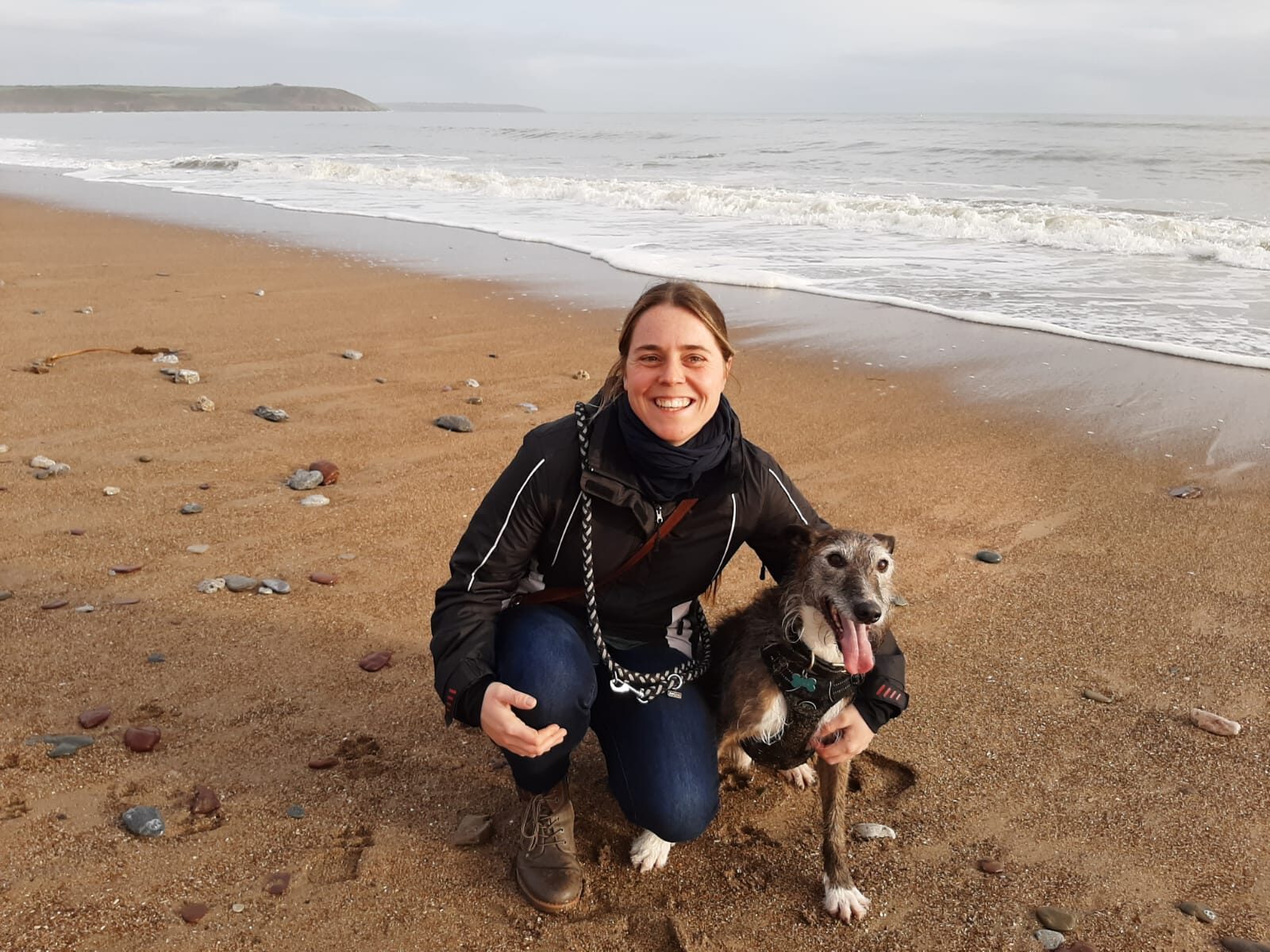
Alena from Alena’s PAWsitive Dog School Interview

What to do when a dog growls at you when he is eating or on the sofa?

Any form of aggression should be discussed with a professional. There are always different reasons for this behaviour, however it is a good start not to let them have access to the sofa or bed if they start guarding those spaces! Normally, I have no problem with people and dogs sharing this space (both my dogs sleep on the bed), BUT when they start guarding that — it’s a big no no!

Resource guarding with food is a different problem and can have multiple reasons. The most important advice I give here is to NEVER take food away from your dog (unless extremely harmful) as this can cause them to feel a need to guard it.


What to do with an anxious dog who can’t be left alone?

This is an issue that can have different reasons as well. The key is to leave your dog for very short periods of time starting with about 30 seconds and working up from that. It’s best to start teaching your dog from an early age that it is ok to be alone.

Leaving them with something to do can also be helpful chewing relieves stress so a stuffed Kong, BECO Bone or similar can be very helpful, but please be careful to not leave your dog with a toy they might destroy so it can become potentially harmful.

Not allowing your pup to follow you into every room (especially the bathroom) teaches them to be less dependent.

If you are concerned, getting advice from a professional can be very helpful for you and your dog.


How to handle your reactive dog on the lead, would they ever be able to be off lead walking around others?

Yes — with a lot of work and effort on the owners part. A reactive dog can be able to be walked off leach and some will find friends to play with as well.

This is the one thing, where I will shout “Get a trainer to help”, simply because it’s too complicated to explain here. Until you get help, find yourself quiet spots with little to no off leash dogs. Advocate for your dog, when another dog or human approaches. Try to walk away if necessary, in case you see problems while they are walking towards you. I own a reactive dog myself and know how hard this journey is. This is also why I became a trainer. If there are people reading this owning happy off leash dogs — please help us out and put them on leads. While your dogs don’t mean any harm, their happy energy can frighten dogs that have had bad experiences.


What is you most and least favourite breed to work with?

Oh — I can’t pick a favourite. I like having loads of different breeds and different personalities in training, since they all have different needs and motivators that challenge me. My least favourite are probably breeds made popular through films, not because of the breed, but rather the expectations owners have thanks to films and media. They don’t realise how much work goes into training a dog. Once owners are aware of that, I love working with those breeds as well.


Best potty training tips for puppies?

Make a schedule! A really simple excel sheet that helps you to remember to bring your pup out every 1 to 2 hours. This is especially important if several people share the responsibility. Also bring them out after every meal time, every nap and every play session.

Crate training will also be a life saver in trying to get your pup potty trained.


What is the biggest mistake you see with owners and training puppies?

Taking too long to start training. Start the second you come home with your puppy. Focus on the most important house rules: on the couch or not, upstairs or not, etc. Start like you want to continue. If you don’t want your 40kg dog to jump up on your white dress don’t allow your cute little puppy to jump up! What they learn at the start is what they will know for the rest of their life. Also waiting too long to get help. It’s much easier to help with a behaviour that just developed than one that the dog is showing for a year.


What are your views on crate training?

LOVE IT! It’s an absolute life saver when raising a puppy. We can’t always have our eyes everywhere when raising a puppy so giving ourselves and our puppies some quiet time makes a huge difference. Dogs living feral would sleep in dens. Simulating one by putting up a crate and making it super cosy, can help your pup to settle. What our puppies don’t learn to do (doing business in the house, eating sofas, shoes, etc…) they are less likely to learn as an adult.


What is best for walking big dogs: haltis, collars or harness, slip lead?

No piece of equipment you buy in a shop will stop your dog from pulling. Some of them might just make it uncomfortable and lure you in a false sense of security.

I love a front clip harness combined with a double clip lead —  not just for big dogs but every dog that pulls. The reason is that it gives me a huge amount of control even when the dog is quite big. My favourite client where this worked is about 50kg herself and she owns a 60kg Mastiff. Her dog used to be very afraid and often tried to run away when he saw cars or leaves. Once I know, I have that control and I’m not hurting my dog, I can start the training process.


Which celebrity dog trainer training style do you agree with the most? Cesar Millan, Victoria Stillwell, Jas Leverette?

Most definitely Victoria Stillwell! Her work is based on a scientific understanding of dogs. She explains well and uses easy to follow methods.

Jas Leverette uses good training methods as well, but they are sometimes not very practical. Also he likes the use of additional equipment that can be hard to set up in certain situations. What I don’t agree with is taking the dog away from the owner for the majority of the initial training process. This way it can be hard for owners to follow through later on.

Cesar Milan  —  I have very strong negative feelings about this training style. He does not have formal qualifications and completely disregards the dogs way of thinking, communicating, learning and just continues to bully them until they give up. I could go on and on about this but won’t for this Q&A.


About Alena:

Alena grew up in Germany and have loved dogs ever since she can remember. While never allowed her own dog — She grew up around her mum’s friends breeding business (Dalmatians).

She has always been interested in the way dogs think and learn and from about 10 years old started following a dog trainer that became very popular through his tv show.

When she came to Ireland and started to volunteer in a shelter, she could finally use some of the advice she heard on the program to help find more of the dogs a loving home.

This is where she met her first dog Jack who quickly showed her that she knew very little! So she began to study everything she could find about canine behaviour to help him work through some of the trauma he experienced before meeting her.

He passion is to help more dogs and people in similar situations, but also to teach puppy owners how to give them the best start in life.


Your can contact Alena via the below:

Contact:

0894848209

[email protected]

alenasdogschool.com

through Facebook and Instagram Alena’s PAWsitive Dog School
itchy

Atopy in Dogs

Most common ear and skin disease


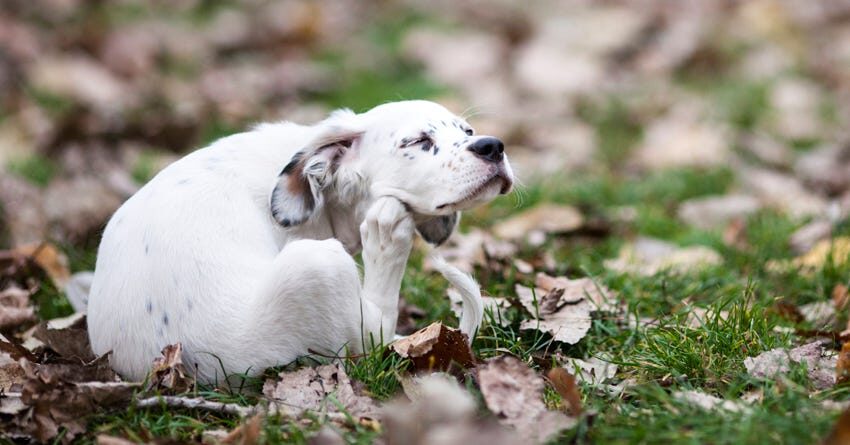
Atopy is a hereditary skin disease of dogs, characterised by skin inflammation and itchiness (pruritus).

Infections by bacteria or yeast are a secondary cause, which will need to be treated, but is not the primary cause for the most common skin condition: atopy.

Current understanding is that it is caused by an abnormal reaction of the immune system to tiny particles in the environment called allergens, combined with abnormalities in the surface layer (stratum corneum) of the skin. Allergens enter the body through the skin and lead to the production of certain antibodies in genetically predisposed animals. These antibodies then cause either intermittent or chronic (long-term) symptoms.

Corticosteroids: these usually come in tablet form or can be given by injection. They can be very useful in acute, short-term cases as they can work within hours, but must be used with care in more long-term cases in order to reduce the risk of side effects. Corticosteroids can also be applied directly to affected skin in the form of gels or sprays. This form of treatment can play a very important part in managing Atopy.

Apoquel/ Cytopoint/Cyclosporine: this drug, like corticosteroids is very effective but costs significantly more. Although slightly slower to work, its advantage over corticosteroids is reduced long-term side effects. Adding in other treatments, listed below, can reduce the dosage and frequency of administration of all systemic drugs:

Prescription diets: these are specially formulated to improve skin health and reduce pruritus.

Essential fatty acids: these originate from fish and various plants such as Evening Primrose and Borage. It may take 8-10 weeks to see the effect of these.

Topical treatments: these are applied directly to the skin in the form of shampoos, lotions and moisturisers. They help soothe and repair.

Hyposensitisation: having a vaccine made up, which contains the allergens your dog is allergic to and injecting this under the skin can be effective in 50 to 80% of cases but usually only yields an overall improvement of 50%.

This is called Allergen Specific Immunotherapy (ASIT). It may take 3-12 months to see a positive response, needs to be given life long and is mainly used with young dogs suffering from symptoms throughout the year.

If your pet suffers from atopy, there is unfortunately no quick fix. Flare ups will occur, when allergen exposure is high, despite adequate treatment.

Atopy is a complex condition and is best discussed with your vet, especially if an itch or an infection is not well controlled.

Speak to us if you would like to discuss this further.

pet-first-aid-kit

First Aid in Dogs and Cats

First Aid In Dogs and Cats


Golden Rules

  • Be prepared – keep your first aid kit organised and up to date.
  • Don’t panic at the first sign of a problem, try and remain calm and be logical in your approach
  • Know when to seek further help – minor problems may often be dealt with at home but if in any doubt consult your vet


First aid as the name suggests is the first treatment you would give when presented with an injury or traumatic episode. We all hope that our pets will never be in the situation where it is needed however the preparation of a basic first aid kit and some tips on how to handle situations may make dealing with an emergency much easier.


Cuts and tears:

These may vary from small superficial skin tears with little blood to larger gashes that require stitching. Basic examination of the wound will help you decide what to do.

  • Trim away any hair that is covering the wound
  • Flush well with a good amount of warm water or saline, this will remove any dust or debris
  • Apply a light bandage or dressing if possible to minimise further contamination- consult your vet if you are worried.

Bleeding wounds:

Some deep wounds or those on ears or tails may bleed profusely. The most important thing to do here is to apply pressure.

  • For severe wounds where a lot of blood is being lost use a tea towel to create a firm pad. This can be bandaged firmly onto the wound and should not be removed until you reach the vets
  • Ears – a head bandage can be applied alternatively use something to hold the ear firmly to the head to stop repeated flapping and give time for a clot to form
  • Tails – lots of tape is often required to hold these in place.
  • Sometimes wounds that appear small, for example a puncture wound caused by a bite may be significantly contaminated by bacteria. There may be tissue damaged underneath the skin that requires veterinary treatment.


Seizures:

Although these may seem very frightening when they occur it is very important you remain calm.

  • Reduce any external stimuli if possible such as loud noises or bright lights
  • Many animals may lose control of bladder or bowel function during a fit this is not unusual
  • Do not attempt to try and clear an airway you may get bitten
  • Reassure your pet whilst the seizure is happening, talk quietly and calmly.


Heat stroke:

Signs may include excessive panting, disorientation, collapse or seizures.

  • Wet towels with cold water and apply them to less hairy parts of the body such as under the front and back legs and over the abdomen. Change the towels as they begin to warm.
  • Create an airflow either using a fan or an open window in a moving car.
  • Avoid completely submerging your animal in water this may lead to more problems
black dog portrait walking in a park, with harness and flea collar low res

Why flea & worm treatments are essential

Protecting our pets and making sure they stay fit and healthy is the most important thing when we decide to introduce a pet to our family. Throughout your pet’s life, it is crucial that you regularly utilise effective, preventative therapies to ward off parasites for the long-term health and wellness of both your pet and your family. Keep in mind that prevention is much simpler and less expensive than treatment.

What are fleas?

A flea is a small, reddish brown, wingless insect, which feeds off the blood of mammals. This can include pets such as our dogs, cats and rabbits but can also include tasty humans. Although they are small they can be seen with the naked eye and are about 1-3 mm long. They have flat bodies and very powerful back legs which mean they can jump huge distances for their size.

Fleas do not live on your pet; they just hop on and off to feed and can live in your floorboards and carpets.  Once you see a flea or flea dirt in the coat, you may have a problem in your house.

What are worms?

There are several different worms that might infect your pet and harm your pet. Roundworms, lungworms, and tapeworms are among the numerous worms that prey on animals. Some worms have the capacity to lay more than 100,000 eggs per day, which are then dispersed across the environment by the pet’s faeces.

Treatment to take

You should:

  • Kill any adult fleas on your pet to stop them biting with a spot on.
  • Break the flea life cycle to stop more adult fleas hatching out with a household spray.

Once you have identified a problem you will have to ensure rigorous flea control for a further 12 months before you can be confident that you have resolved it.  But of course: prevention is best.

At Glasslyn Vets, we always promote the importance of flea and worm treatments for your pet to ensure they are protected against one of the most common dangers.  We stock Advocate (a monthly spot on) and Bravecto Plus (a 3 monthly spot on), which treat fleas and most worms.  In addition, you should give your cat a tapeworm tablet very 6-12 months if she is an outdoor cat. Do it twice yearly if she is an avid hunter.

If you would like to know more about flea And worm treatments, contact us today.

Cute puppy dog getting medication after treatment at the veterin

Canine Cough

Canine cough is a highly infectious and transmissible upper respiratory infection of dogs. It was previously known as kennel cough with the misconception that it can only be caught by dogs boarding in kennels. However, canine cough can affect any dogs mixing with others i.e. in the local park, at the groomers, puppy classes etc.

Typically, dogs infected with canine cough present with a dry hacking cough that can last from 5 – 10 days and usually require veterinary attention. Other symptoms include reduced appetite, lethargy and a high temperature. Puppies, older dogs and dogs with underlying illnesses can be more seriously affected and can run the risk of developing bronchopneumonia or chronic bronchitis.

Dogs usually require a course of antibiotics and steroids to help with tracheal inflammation. Sometimes the vet will discuss chest x-rays to rule out any other causes of coughing. If you suspect your dog has canine cough and you are bringing them to the vet clinic, we ask that the patient remains in the car until the vet is ready for him/her. This is due to its highly infectious nature and to reduce the risk of spread to any other dogs in the clinic.

There are typically two infectious agents that cause canine cough:

  • Parainfluenza
  • Bordetella Bronchiseptica

It is important that we keep up to date yearly with vaccines. If your dog is going into kennels or you plan to do training classes or puppy classes, your pet will require the canine cough vaccine at least 3 weeks beforehand.

The vaccine can be given in 3 different ways:

  • Up the nose
  • Into the mouth
  • In injectable form

Each method is as effective as the other. For more information on canine cough please contact our companion veterinary team on 023 8841404 or 021 4772277.

Cute cat cleaning dogs teeth low res

Importance of Pet Dental Health

Looking after the dental health of your pet is very important.  By the young age of three most dogs and cats have some degree of dental disease. Unfortunately, this is not noticed by many pet owners until later in their lives as pets tend to hide signs of discomfort a little bit better than we do. It is usually not until owners notice that their furry friend has smelly breath which is a common sign of dental disease.

What are the other signs of dental disease?

Some signs of dental disease can be more subtle than others, but they are still important to identify.

  • Plaque and Tartar build-up

Plaque is a film on the teeth that is composed of bacteria; when this accumulates, it can harden into tartar.

  • Red, swollen or bleeding gums
  • Difficulty eating or chewing
  • Loss of appetite
  • Weight loss
  • Pain

If your pet is reluctant to let you touch their mouth, outside or inside, they may be experiencing pain. Pain occurs when tartar and food are trapped below the gum line.

Importance of regular examinations

We recommend regular examinations by a veterinary surgeon or nurse to determine if your pet needs teeth cleaning or something more invasive like a dental extraction. A routine dental cleaning involves scaling and polishing of the teeth but if an extraction is needed the vet will discuss this procedure with owners prior to doing so. We also offer dental x-ray which is important to determine the health of the roots of the teeth and surrounding bone.

Although this may prove to be difficult, we would highly recommend regular teeth brushing for your pet. We offer a variety of toothbrushes, toothpaste and water additives specifically designed for pets (not human toothpaste!). Pets who have 100% wet food diets are particularly vulnerable, so we recommended appropriate dry food and dental chews which helps to crack off some plaque buildup.

Thanks to Laura Creedon, Veterinary Nurse, for her insights into this area.

Bandon Contact Details
📞 023 8841404
📍 Station Road,
Bandon,
Co. Cork.
Ireland.
P72 FY72
Muskerry Vets
📞 02641055
📍 Sawmill Yard, Macroom,
Co. Cork,
Ireland.
P12EY80

Kinsale Contact Details
📞 021 4772277
📍 1 Church Square,
Kinsale,
Co. Cork.
Ireland.
P17 W281
Carbery Vets
📞 023 8845206
📍 Bridge street
Dunmanway
Co Cork
Ireland
P47FN36